
China Home Energy Storage System Factory: How to Vet the Line
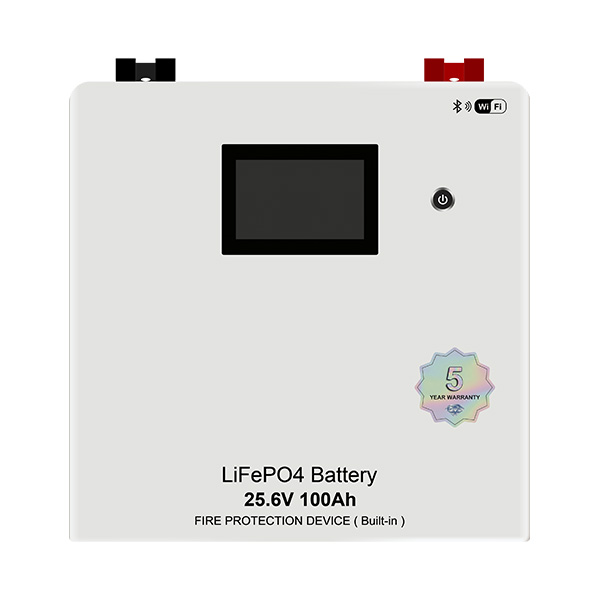
Quick Answer: a China home energy storage system factory worth your deposit will show you three things up front: where the LiFePO4 cells come from, how the built-in fire protection device is fitted inside the pack, and which inverter protocols the BMS supports. Our line in Linyi builds 25.6V wall-mounted batteries in 100, 200 and 300 Ah, each with an LCD panel, Bluetooth and WiFi monitoring, and each labeled for a 5-year warranty. If a supplier cannot walk you through those details in one call, keep looking.
What a China Home Energy Storage System Factory Actually Builds
Plenty of companies calling themselves a China home energy storage system factory assemble packs from purchased cells, and plenty of them do it well. The distinction that matters is which operations happen inside the building you would audit. At our plant the pack line handles cell grading, module stacking, busbar welding, BMS mating and the fire protection layer, while enclosures are coated and gasketed on site. Cell sourcing is a purchasing decision we manage, not a process we hide. Ask any candidate factory to name the machines that would touch your order, from the welding station to the final electrical test bench. If the answer is a product catalog, you are talking to a trader.
Inside the Pack: Eight Cells, One BMS, One Fire Layer
A 25.6V nominal pack is eight LiFePO4 cells in series, 3.2V each. The BMS balances the string, cuts charge current when a cell drifts, and logs temperature at several points. What separates a serious pack from a commodity one sits in details you can ask about on a video call: whether the busbars are welded or merely bolted, how the assembly leaves room for cell swelling after years of daily cycling, and what the built-in fire protection device actually is. Ours is an integral unit fitted inside the enclosure. Some suppliers print fire protection on the label and ship nothing but foam padding. Ask what the device is made of, where it sits relative to the cells, and whether it was validated with the pack or bought off a shelf. One honest answer tells you more than a whole brochure.
Sizing the Battery: 100 Ah, 200 Ah or 300 Ah
Capacity is the easiest decision once you know the load. Multiply 25.6V by the amp-hours and you get nominal energy; what the household actually draws depends on the inverter's depth-of-discharge setting. The three models below cover most residential jobs:
| Model | Nominal Voltage | Capacity | Nominal Energy | Mounting | Typical Use |
|---|---|---|---|---|---|
| 25.6V 100Ah | 25.6V | 100 Ah | 2.56 kWh | Wall | Lighting, fridge and router backup |
| 25.6V 200 Ah | 25.6V | 200 Ah | 5.12 kWh | Wall | Evening load shifting for a 3-4 room house |
| 25.6V 300Ah | 25.6V | 300 Ah | 7.68 kWh | Floor, on castors | Longer autonomy, parallel banks |
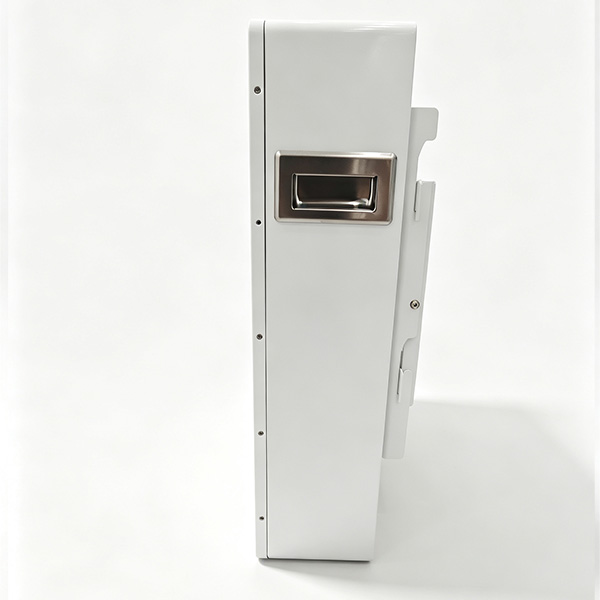
The 25.6V 100Ah unit carries the evening basics: lighting, a refrigerator, communications. Step up to the 200 Ah version and you double the reserve without a second wall bracket. The 300 Ah floor model rolls on castors, which installers appreciate on job sites with no second pair of hands. All three share the same LCD readout, the same Bluetooth and WiFi app monitoring, and the same fire protection layout.
Inverter Compatibility: Ask for the Protocol Sheet
This is where a China home energy storage system factory either earns the repeat order or collects warranty claims. Most residential installs in Africa, the Middle East and Southeast Asia run single-phase hybrid inverters, and each brand expects its own communication profile. Our packs carry built-in Bluetooth and WiFi for app-level monitoring, and the front LCD shows state of charge without opening a phone. Before you order, send the factory your inverter model and ask two things: does the BMS support closed-loop communication with that model, and which charge parameters should the installer enter on first commissioning. A supplier who answers that in one email will answer just as fast after the sale.
Shipping Lithium: the Documents That Set Your Delivery Date
LiFePO4 packs travel as Class 9 dangerous goods, so the paperwork is not optional. Sea freight needs a UN38.3 test summary, and several destination markets also expect IEC 62619 for stationary storage or CE marking under the relevant directives. This detail decides whether a China home energy storage system factory can load your container in 25 days or whether it sits for 40: one that keeps test reports current books vessel space immediately, one that starts certifying after your deposit does not. Ask for the document set before you transfer money, then check the dates on each report instead of trusting the logos. We ship to more than 50 countries and prepare this file with every lithium order, because freight forwarders will not move the goods without it.
FAQ
What is the difference between a 25.6V and a 51.2V home battery?
Both use the same LiFePO4 chemistry. A 25.6V pack is an 8-cell series string matched to 24V-class inverter systems, common where loads are modest and grid supply is unstable. A 51.2V pack doubles the series count, halves the current for the same power output, and suits larger single-phase systems. Choose by your inverter's rated battery voltage, not by price per kWh.
Can I start with one 25.6V 100Ah battery and add more later?
Usually yes, the packs are designed for parallel connection to increase amp-hours. The limits come from the BMS, which sets a maximum parallel count, and from aging: pairing a brand-new pack with a heavily cycled one causes current imbalance between them. Ask the factory for the maximum parallel figure before sizing the first unit, and order expansion batteries from the same batch when possible.
Quanshi, Shandong Quanshi New Material Co., Ltd, produces home energy storage batteries, power distribution boxes, transformers and hybrid inverters at its facility in Linyi, Shandong, with production managed under ISO 9001 and exports reaching more than 50 countries. As a China home energy storage system factory serving distributors and installers across Africa, the Middle East and Europe, we quote from stock drawings, support OEM labeling, and reply to technical questions the same working day. For the current 25.6V series specification sheet and a sample quotation, write to lunaquan1989@163.com or call +86 15588163070.