
Hybrid Inverter Sizing: Single-Phase 3–8 kW or Three-Phase 10–50 kW?
Start from the load, not the array
The most common sizing error in hybrid systems is matching the inverter to the solar array and then discovering that the inverter cannot carry the load during an outage. A hybrid inverter has to satisfy two different requirements at once. It must convert the DC from your panels into usable AC, and it must supply the backup loads from the battery when the grid disappears. Those two numbers are not the same, and the second one is the one that causes callbacks.
Quanshi's hybrid range covers single-phase from 3 kW to 8 kW and three-phase from 10 kW to 50 kW, with on-grid, off-grid and backup modes plus parallel capability on both sides of the range.
Single-phase 3–8 kW: homes and small commercial
Single-phase is the default for residential markets across most of Asia, Africa, Latin America and parts of Europe. The 3 kW to 8 kW band covers an apartment, a standalone house, a small retail unit or a clinic. A typical family home with air conditioning might peak at 5 to 6 kW, which puts it in the middle of the range with headroom for motor starting.
The practical constraint on single-phase is imbalance. If the building has a three-phase supply and you back up only one phase, you have decided which circuits keep running when the grid fails. That is fine in a house where the whole installation is single-phase, and it is a problem in a building with three-phase equipment such as a lift, a large pump or a commercial kitchen.
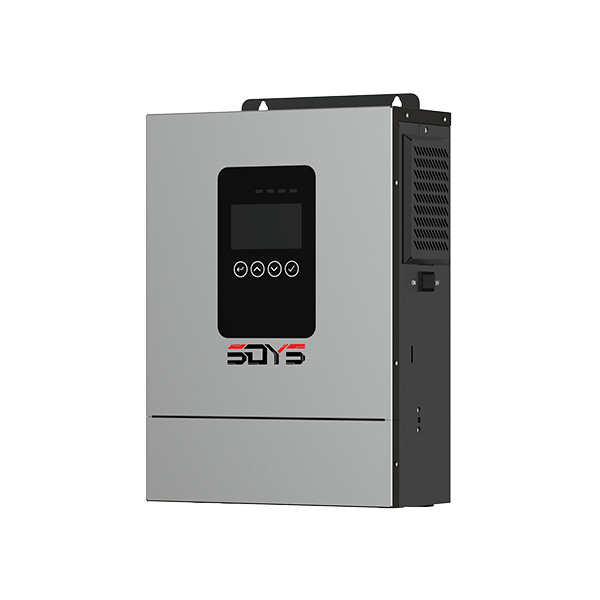
Quanshi's single-phase models, from the S1.2 through S2.0, S3.6 and S6.5, pair naturally with the 25.6V wall-mounted battery packs, which is the configuration most residential installers are specifying today.
Three-phase 10–50 kW: commercial and light industrial
Once a site has three-phase machinery, or once the load exceeds roughly 10 kW, three-phase is the right answer. The S12 sits at the top of the Quanshi range and covers substantial commercial loads: cold storage, small manufacturing, agricultural processing, hotels, schools and telecom sites.
Three-phase inverters also make far more sense paired with high-voltage battery banks. A 51.2V rack at 314 Ah, 600 Ah or 628 Ah matches the DC bus architecture these inverters expect, and the current stays manageable at power levels where a 25.6V bank would need cabling that nobody wants to install.
Sizing method that survives contact with reality
List every load you intend to back up, with running watts and starting surge. Motor loads are the trap: a pump that runs at 1.5 kW can draw four to six times that for a second or two at start, and an inverter that is correctly sized for the running load will trip on the surge. Add the largest motor surge to the sum of the other running loads, then apply 20 percent headroom.
Separately, calculate the energy side. Multiply the backed-up load in kW by the hours of autonomy you need, divide by the depth of discharge you are willing to cycle to, and that gives you the battery capacity in kWh. The inverter rating and the battery capacity are independent calculations that both have to be right.
Then check the DC input window against your chosen battery voltage and confirm the communication protocol. Quanshi's BMS speaks CAN, RS485 and Modbus, and customer-defined parameters can be pre-flashed on ODM orders.
Installation details that cause commissioning failures
Backup wiring needs a changeover arrangement that isolates the installation from the grid before the inverter energises it. Feeding backup power into a live grid connection is dangerous and illegal, and it is also the reason an inverter will refuse to start in backup mode if the wiring is wrong.
Check that the neutral and earth arrangement matches the local code, since this varies by country and an incorrectly bonded neutral will either trip protective devices or create a shock risk. Confirm that the PV array's open-circuit voltage at the site's lowest recorded temperature stays inside the inverter's maximum DC input, because panel voltage rises as temperature falls and cold-morning overvoltage is a common failure in temperate climates. And if you are paralleling units, confirm the parallel configuration is supported for both grid-tied and backup operation, not just one of them.
What to send for a quotation
Grid configuration and nominal voltage, backed-up load list with surge figures, required autonomy in hours, PV array size and string configuration, preferred battery voltage, and whether the site is new-build or retrofit. With that information Quanshi's engineering team can return a matched inverter and battery configuration along with lead times, which run 5 to 7 business days for standard SKUs and 2 to 3 weeks for custom ODM.