
PZ30 Distribution Boxes: Concealed or Surface-Mounted, and How to Specify One
Why PZ30 still dominates
The PZ30 is the workhorse of Chinese and export residential distribution. It is a standardized modular enclosure that takes DIN-rail devices: main isolator, residual current devices, miniature circuit breakers, surge protection, and increasingly an energy meter or a smart module. Contractors know it, electricians know it, and the device ecosystem around it is completely commoditized, which keeps both cost and lead time down.
Quanshi builds the national standard PZ30 in both concealed and surface-mounted versions, along with a foundation box for ground-level and outdoor distribution and power boxes for heavier circuit loads.
Concealed: cleaner finish, harder to change
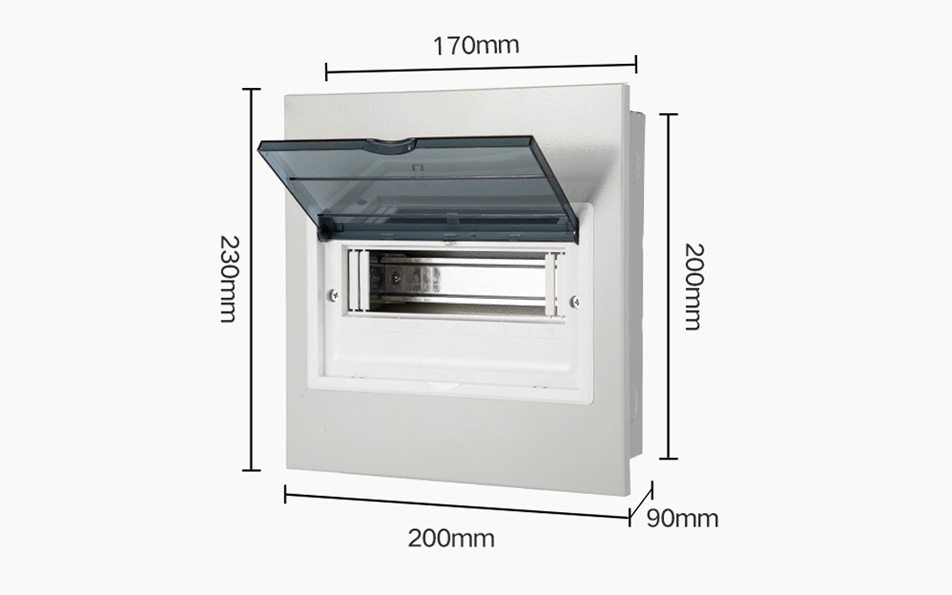
A concealed box is built into the wall. The body sits in a chased recess so that only the front frame and door are flush with the finished surface, which is what architects ask for in apartments, hotel rooms, offices and any interior where a box standing 100 mm off the wall would look like a mistake.
The cost of that finish is inflexibility. The recess has to be cut before plastering, so the box position and size must be fixed early in the programme. Depth matters: once you add RCDs, a surge device and a meter, the internal volume gets tight, and a box that was specified with just enough depth for six breakers will not accept a later addition. Retrofitting a concealed unit means chasing out more wall, making good, and repainting, so the saving on the unit is irrelevant compared with the disruption.
Choose concealed when the building is new-build or undergoing full renovation, when the wall construction allows a recess of the required depth, and when the circuit count is unlikely to grow.
Surface-mounted: the pragmatic default
A surface-mounted box fixes straight onto the finished wall. It is faster to install, easier to inspect, and simple to replace or upgrade later. It is the standard choice for retrofits, plant rooms, basements, garages, workshops, utility spaces and industrial units, and it is also common in rental property where access matters more than appearance.
The visual objection is real but manageable. In a plant room nobody cares. In a finished corridor, a recessed cabinet or a cupboard solves it. Quanshi's enclosures are produced in-house with laser cutting, CNC and automated coating, so custom dimensions, colours and cutouts are available through OEM and ODM rather than being a special request nobody wants to handle.
Getting the module count right
This is where most orders go wrong. Count the devices you need today, then add spare ways. A typical small apartment might need a two-pole main isolator, two RCDs across lighting and socket circuits, six to ten breakers, and a surge protective device. That is easily sixteen to twenty modules once you account for the width of two-pole devices.
Then think about what the occupant will add in five years: an air conditioning circuit, an electric vehicle charger, a second kitchen circuit. Specifying a box with four spare ways costs very little at the time of purchase and avoids a board replacement later. Quanshi's OEM customers frequently specify a standard house layout with spare ways built in, precisely because it reduces callbacks.
The foundation box for ground and outdoor work
Where distribution has to sit at ground level, in a garden, a driveway, a site compound or a street-facing location, a foundation box provides a below-grade or partially buried housing with a sealed enclosure for the devices. The engineering priorities here are different: water ingress, mechanical load from vehicles or foot traffic, UV exposure on any exposed surface, and corrosion at the cable entry points.
Specify the IP rating for the actual conditions rather than a nominal indoor figure, and think about how the cables enter. The entry detail is where outdoor enclosures fail.
Specification checklist
Number of modules and spare ways. Mounting type, concealed or surface. Enclosure material, metal or SMC composite. IP rating. Door style, plain or glazed, with or without a lock. Knockout or gland plate arrangement. Colour. Whether you need a meter cutout or a window. And for OEM orders, whether the logo, labelling and packaging need to carry your brand, which starts at 10 units.
Send that list with your annual volume and Quanshi will return a quotation within two business days, with standard SKUs shipping in 5 to 7 business days and custom ODM in 2 to 3 weeks.