
S11 vs S13 Oil-Immersed Transformers: How to Choose for Your Grid Project
The real difference between S11 and S13
S11 and S13 are not model numbers invented by a marketing department. In Chinese transformer practice they label successive energy-efficiency generations, and the number that changes is no-load loss, also called iron loss. An S13 unit built with the same rating as an S11 unit draws less current from the grid while it sits energized, and that happens every hour of every day, whether or not anyone is drawing load.
Quanshi manufactures both series in the 30 kVA to 2,500 kVA range with primary voltages up to 35 kV, so the decision is rarely about availability. It is about what your project optimizes for.
Where the loss actually comes from
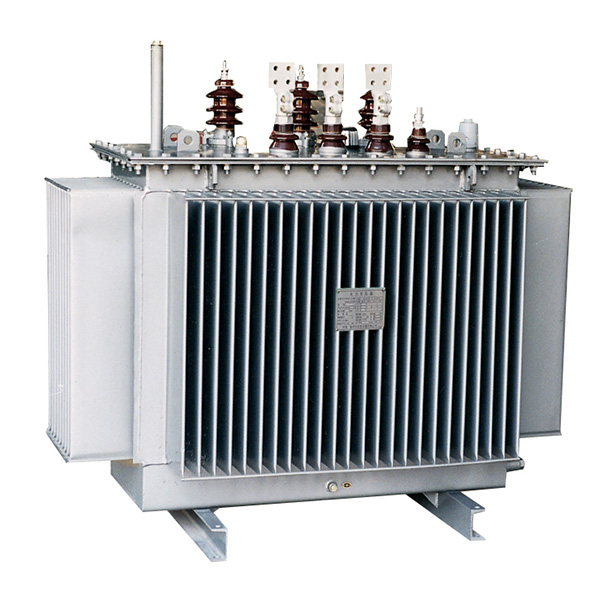
No-load loss is set by the core. The steel grade, the lamination thickness, the stacking method and the joint geometry all decide how much energy the core wastes as it is magnetized 50 or 60 times a second. Moving from S11 to S13 typically means higher-grade grain-oriented silicon steel, thinner laminations, and a stepped-lap core joint that reduces flux disturbance where the limbs meet the yoke.
The practical consequence is that an S13 transformer runs cooler on the same load and costs more to buy. Load loss, the copper loss that appears once current flows, is broadly comparable between the two series at the same rating. If your transformer spends most of its life lightly loaded, no-load loss dominates the lifetime energy bill and S13 wins on arithmetic.
Doing the payback calculation honestly
Utility and industrial buyers usually run a simple total cost of ownership comparison rather than arguing about efficiency classes. The method is worth spelling out because it is where most procurement mistakes happen.
Estimate the annual no-load energy as no-load loss in watts multiplied by 8,760 hours, divided by 1,000 to get kWh. Do the same for load loss, but multiply by the equivalent operating hours at your actual load factor rather than a full year, since copper loss scales with the square of the load current. Add the two figures, multiply by your electricity tariff, and you have a yearly energy cost. The difference between the S11 and S13 figures is your annual saving, and the S13 price premium divided by that saving is the payback period in years.
For a transformer that is energized continuously, payback commonly lands in the range of two to five years depending on the local tariff. A standby unit that is switched on a few days a year will never repay the premium, and buying S13 for it is money spent on a number in a datasheet.
Where oil-immersed is the right technology at all
Oil does two jobs. It carries heat out of the windings to the tank surface, and it provides most of the insulation between live parts and the tank. That combination is why oil-immersed designs remain the default for outdoor substations, pole-mounted distribution, and any rating where the cooling budget matters.
Quanshi builds these units to IEC 60076 with CE and CCC available, and UL or KC certification on request for markets that require it. If your installation is indoors, in a high-rise, under a shopping centre, or anywhere that a fire officer will ask uncomfortable questions about combustible liquid, you want the dry-type range instead. That is a separate decision from S11 versus S13.
Specification details that cause delays
Most project delays in this category have nothing to do with efficiency. They come from incomplete specifications at the enquiry stage. Before you request a quote, nail down the following.
Rating in kVA, not kW. Primary and secondary voltage, plus the tapping range you need on the high-voltage side. Vector group, because Dy11 and Yyn0 are not interchangeable when you are paralleling with existing plant. Frequency, 50 or 60 Hz. Impedance voltage, which affects fault levels downstream. Cooling designation such as ONAN. Altitude if the site is above 1,000 metres, since cooling derates with thinner air. Ambient temperature range. And cable entry arrangement, gland plate or bushing side, which nobody remembers until the unit is on the plinth.
How Quanshi builds and tests them
Winding, core assembly, vacuum drying and oil filling all happen in-house at the Linyi facility, under an ISO 9001 quality system with an in-house test laboratory. Every unit gets routine testing before it leaves, and type and dielectric testing are available for project approvals. Large transformer orders at or above 1,000 kVA are scheduled on a project basis, so it is worth sharing your delivery calendar at quotation stage rather than after the order is placed.
Which one should you buy
Choose S13 when the transformer runs continuously, when your tariff is high, when a utility efficiency standard mandates it, or when the unit will be in service for twenty years and you will be the one paying the bill. Choose S11 when the budget is tight, when the duty cycle is intermittent, or when the unit is a temporary or standby installation.
If you are unsure, send the load profile and the tariff. A manufacturer who will not run the payback calculation with you is a manufacturer who is selling on price alone.