
Grade A LiFePO4 Cells: What Distributors Should Verify Before Importing
The grade is not a marketing word
Cell manufacturers sort production into grades, and the sorting is real. Cells that fall outside tight tolerances on capacity, internal resistance or self-discharge are sold as Grade B, and further down the chain they appear in packs priced attractively enough to tempt a distributor who is competing on price.
The problem is that a pack is only as good as its weakest cell. In a series string, the lowest-capacity cell determines usable pack capacity, because the BMS stops charging when the first cell reaches its limit and stops discharging when the first cell empties. Buy cheap cells and you pay for a nominal capacity you can never use, plus a warranty claim rate that quietly consumes the margin you thought you had made.
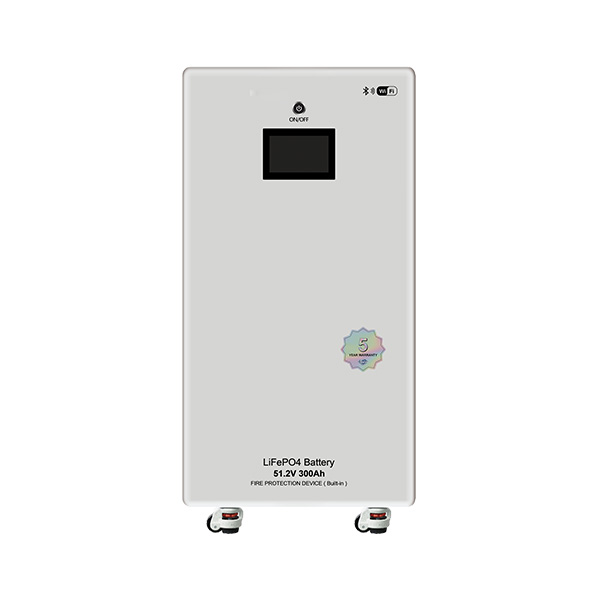
Quanshi builds packs with Grade A LiFePO4 cells from CATL, BYD or EVE depending on the SKU, and grades each cell to within 2 millivolts and 1 milliohm of internal resistance. Those are the two numbers worth challenging any supplier on.
The two numbers that matter
Voltage deviation across cells in a string should be as close to zero as the supplier can achieve, and 2 millivolts is a tight tolerance. Wider spread means the balancer is working continuously to hold cells together, which wastes energy and generates heat, and it usually indicates cells from different production batches matched by software rather than by selection.
Internal resistance tells you how much a cell will heat under load and how quickly it will degrade. A spread of more than a milliohm across a string means current will not divide evenly, the high-resistance cells run hotter, and those cells age faster than the rest. That is how a pack that tested well at commissioning develops a capacity problem eighteen months later.
Ask for the grading data for the specific serial numbers you are buying, not a generic datasheet figure. A supplier who grades properly has the data because the process produces it.
Documents to request before you pay
A per-serial cycle test report for each pack, not a batch summary. Cell traceability back to the manufacturer and production batch. UN 38.3 test summary for transport, which you will need regardless for shipping. IEC 62619 for the cells and pack if the destination market requires it, and CE or UL documentation as applicable. MSDS for customs and for your own safety file. And the warranty terms in writing, with the claim procedure described rather than implied.
Quanshi ships every pack with a per-serial cycle test report and backs the range with a two-year warranty, 100 percent routine testing, and spare parts support. That last item is more valuable than it appears: a warranty is only as good as the availability of a replacement module, and Quanshi holds buffer stock at its forwarder for major markets so warranty swaps dispatch within 48 hours.
Questions to ask on a factory audit
Whether grading is done in-house or outsourced. Whether the cell supplier is named on the quotation or described vaguely as a tier-one manufacturer. What the welding process is, since a laser or ultrasonic weld is not the same as a spot weld that will crack under vibration. Whether the BMS is designed in-house or bought as a generic board, because firmware support depends on the answer. Whether packs are cycled before shipment or only charged, since a pack that has never been cycled has never been tested.
And ask what happens when something fails. A supplier's answer to that question tells you more than any certificate on the wall.
The commercial arithmetic
A downgraded pack might cost 8 to 12 percent less. The difference gets eaten by the first warranty replacement, which costs you the unit, the freight, the installer's time, and a customer who now buys elsewhere. Distributors who survive in this market tend to reach the same conclusion within about two years: buy the grading, not the discount.
If you are entering a new market, start with samples. Quanshi ships sample units for most standard SKUs via DHL or FedEx, and the sample cost is refundable against a future bulk order. That is a cheap way to test a supplier's consistency while your own sales channel is still forming.
What to send with your enquiry
Target market and required certifications, capacity and voltage per pack, expected annual volume, whether you need OEM branding or full ODM, and the inverter or BMS protocol you must communicate with. The BMS supports CAN, RS485 and Modbus, and customer-defined parameters can be pre-flashed on ODM orders. Standard OEM branding starts at 10 units and custom ODM tooling at 50 units, with engineering samples typically taking two to three weeks.