
SMC Composite vs Metal Distribution Enclosures: Which Survives Outdoors?
Material choice decides the service life
Two enclosures can look identical on a drawing and behave completely differently after five years on a coastal wall. The difference is material, and it is one of the few decisions in distribution equipment that determines whether you are replacing units or forgetting about them.
Quanshi built its SMC and BMC moulding capability and its new-material R&D centre in 2019, having started as a distribution box manufacturer back in 2010. That history matters because the company has watched both materials in the field for long enough to know where each one fails.
What SMC actually is
Sheet moulding compound is glass fibre reinforcement in a thermoset polyester matrix, compression moulded under heat and pressure. The result is a rigid, dimensionally stable shell that does not behave like metal at all.
It does not corrode. That single property eliminates the dominant failure mode for outdoor enclosures in coastal, industrial and agricultural environments, where salt spray, fertiliser dust and chemical vapours attack coated steel from a scratch or a cut edge outwards. Composite is electrically insulating, which removes the need for an internal earth bond to the shell and reduces the consequences of a live conductor touching the enclosure. It does not require a conductive path to ground, and it will not become one by accident.
Weight is roughly a third to a half of an equivalent steel enclosure, which matters when one person is installing twenty units on a housing estate. And it does not dent permanently the way thin sheet steel does, so a knock during handling or a minor impact in service leaves the enclosure functional.
Where metal still wins
Steel is stronger in absolute terms. For a large floor-standing enclosure carrying heavy switchgear, or for a cabinet that must resist determined physical attack, metal is the right answer. Steel also shields electromagnetic interference, which matters when sensitive equipment shares the cabinet. And metal is easier to modify on site: an extra hole can be cut and a new gland plate fitted with tools that every electrician carries, whereas cutting composite generates dust that needs extraction and a respirator.
Cost is more nuanced than the usual assumption. Raw composite material costs more per kilogram than mild steel, but compression moulding produces a finished shell with colour through the material, integral bosses and no painting stage. Once you factor out the coating line and the corrosion warranty claims, the lifetime comparison often favours composite in exposed locations.
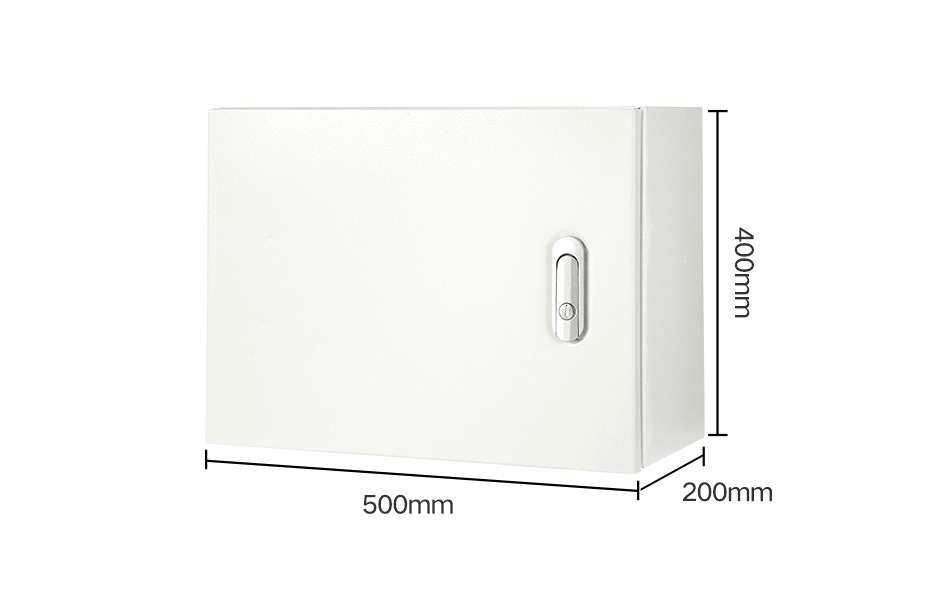
The outdoor failure modes, compared
UV exposure degrades surface resin over years, causing chalking and fibre bloom on unpainted composite. The fix is a UV-stabilised formulation or a gel coat, and it is worth asking the supplier whether the material is UV stabilised for outdoor service or only formulated for indoor use.
Coated steel fails from the edge inwards. A scratched cut edge, an untreated drill hole or a poorly prepared surface becomes a rust line that spreads under the coating. Galvanised and stainless options push this back substantially, at a cost that approaches or exceeds composite depending on the grade.
Gasket degradation affects both equally. The enclosure material rarely leaks; the seal, the gland plate and the cable entry do. Whichever material you choose, specify the gasket material for the temperature range and check that the door compresses it evenly.
Choosing for the application
Coastal installations, agricultural buildings, chemical plants, wastewater sites and swimming pool plant rooms suit composite. Indoor distribution in a dry plant room, heavy industrial switchrooms, and any cabinet needing EMC shielding or high mechanical security suit metal. Mixed estates often standardise on composite for external meter boxes and metal for internal distribution, which is a defensible split.
Because Quanshi moulds composite and cuts metal in the same facility, the two can also be combined: a composite shell with a metal backplate and mounting rail, which gives corrosion resistance outside with familiar device mounting inside.
What to specify
Material and grade, with UV stabilisation stated for outdoor service. IP rating appropriate to the conditions, not a nominal figure. Impact rating if the location is publicly accessible. Operating temperature range. Colour, which for composite is moulded in rather than painted. Gasket material. And for OEM buyers, whether branding is moulded in or applied as a label, since moulded-in branding cannot peel.
OEM branding starts at 10 units and custom ODM tooling at 50 units, with samples available for most standard SKUs and sample cost refundable against a future bulk order.