
SCB10 to SCB14 Dry-Type Transformers: What the Efficiency Code Really Tells You
Reading the code
The SCB prefix is a shorthand Chinese buyers and specifiers use every day. S means three-phase. C means the windings are cast in resin rather than immersed in liquid. B means the foil or wire conductor is on the low-voltage side in a specific construction convention. The number that follows is the loss generation, and it is the part that decides what you pay for electricity over the next two decades.
Quanshi's dry-type line covers SCB10 through SCB14 across the 30 kVA to 2,500 kVA range, with primary voltages up to 35 kV. The physical difference between these codes is not cosmetic. Each step up generally brings better core steel, thinner laminations and a redesigned winding that lowers loss and, in the higher codes, reduces the audible hum that building occupants complain about.
Why cast resin exists
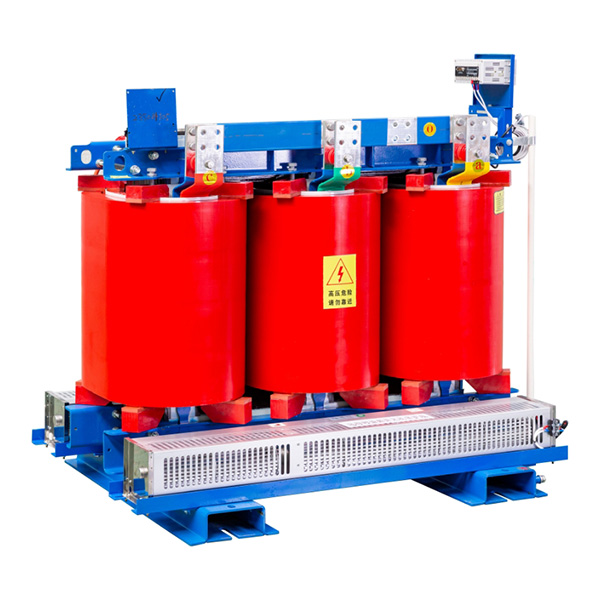
A dry-type transformer replaces oil with epoxy resin vacuum-cast around the windings. That single change removes the combustible liquid from the equation, and everything else about the product follows from it. There is no oil containment bund to build, no oil sampling regime, no leak risk in a basement, and no fire suppression system sized for a flammable liquid pool.
That is why cast resin is the standard answer for high-rise buildings, hospitals, data halls, metro stations, tunnels, offshore platforms and anywhere the transformer sits in the same envelope as people. The trade-off is that air cools less effectively than oil, so dry-type units are physically larger for the same rating and more sensitive to dust, humidity and blocked ventilation.
Matching the code to the building
SCB10 remains a perfectly serviceable specification and is still written into a large number of tender documents. It is usually the lowest capital cost and is a reasonable choice where the transformer feeds a load that operates intermittently, such as a plant room that runs during production shifts only.
SCB11 and SCB12 sit in the middle and are the common compromise when a consultant wants lower losses without moving to the top price band. SCB13 is where most continuous-duty commercial projects land, because the no-load loss reduction pays back within a few years on a unit that is energized around the clock. SCB14 is the premium tier, specified where a green building certification, a utility incentive or a corporate carbon target makes the efficiency figure part of the project's compliance paperwork.
If you are writing a specification rather than responding to one, state the loss values you require in watts rather than only naming a code. Two manufacturers can both claim SCB13 and deliver different measured losses, because the code sets a ceiling, not a guaranteed figure.
Ventilation is the most common site failure
Dry-type transformers fail because of their environment far more often than because of their design. Cast resin windings rely on air moving through the cooling ducts, so the room matters.
Provide intake and exhaust openings sized to remove the total loss as heat, with the exhaust high and the intake low so buoyancy does the work. Keep the openings free of stored material, which happens more often than anyone admits. Fit the temperature controller and actually connect its alarm output to the building management system. Specify the enclosure rating honestly: an indoor dry-type transformer in a clean plant room does not need a high IP rating, but the same unit in a coastal or dusty industrial site does, and resin does not forgive salt-laden humidity.
Quanshi builds these units with maintenance-free operation in mind, and running noise stays below 55 dB at full load, which is why the range is regularly specified into hospitals and office buildings where an acoustic ceiling is not going to hide a humming transformer.
Certifications and testing to request
Ask for IEC 60076 compliance as the baseline, then confirm which market approvals your project actually needs. CE covers the European Union, CCC is required in China, and UL or KC can be arranged where a local inspector will ask for them. Quanshi holds ISO 9001 with CE and CCC, and is an SGS-audited supplier.
For project approvals beyond routine testing, request type test reports and dielectric testing documentation before the factory release. On larger ratings, ask about partial discharge measurement, since partial discharge is the failure mode that quietly ends a cast-resin transformer's life long before the windings themselves give up.
Getting the specification right first time
Send rating, primary and secondary voltage, tapping range, vector group, frequency, impedance, insulation class, enclosure IP rating, and the altitude of the installation. Include whether you need a forced-air cooling option for overload periods. The more of this that arrives with the first enquiry, the shorter the quotation cycle, and the less likely you are to discover a mismatch after the concrete plinth has been poured.