
Pad Mounted Transformer Factory China: What to Verify Before the Deposit
Quick Answer: before you compare prices, a pad mounted transformer factory China quote has to answer three questions: which winding line builds the tank, what the no-load and load losses are, and which routine tests ship with each unit. A pad-mounted transformer is a liquid-filled distribution transformer set on a concrete pad inside a locked, tamper-resistant enclosure. Everything that decides its service life sits inside the tank, so verify the coils and the oil system first, then talk about the cabinet and the paint.
Pad Mounted Transformer Factory China Checklist: Start With the Winding Line
Not every supplier quoting pad-mounted work owns the equipment behind the price. Ask which machines in the plant will actually touch your order. On our floor the answer is concrete: the oil-immersed line builds S11 and S13 distribution tanks from 30 kVA up to 110 kV grid models, and the cast-resin line winds coils from 50 kVA to 3150 kVA at 50 or 60 Hz. A trading office cannot name the core stacking table, the vacuum drying cycle or the oil-filling rig, because it has never stood next to one. That difference decides whether a drawing change costs three days or three weeks.
What Sits Inside the Pad-Mount Enclosure
Start the conversation by asking what the enclosure package includes, because not every pad mounted transformer factory China quotes the cabinet together with the tank. Under the housing, the machine is straightforward. A sealed tank holds the windings in mineral oil. High-voltage bushings terminate in a front compartment behind a locked door, low-voltage cables leave from the side, and the primary protection, usually fuses and sometimes a load-break switch, lives in its own bay so a utility crew never opens the tank itself. See the S11-200/10 oil immersed transformer for a typical 10 kV class tank in this family. The enclosure is sheet steel, vented and grounded, and it is the cheapest part of the assembly to replace. The tank is not: once the pad is poured and the cables are pulled, swapping a transformer means a crane and a shutdown, which is why winding quality carries the whole decision.
Oil-Filled or Dry-Type: Choosing What Goes on the Pad
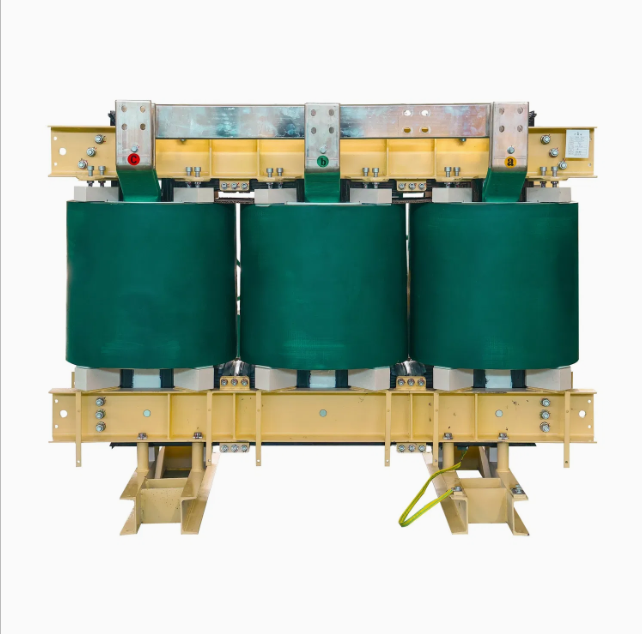
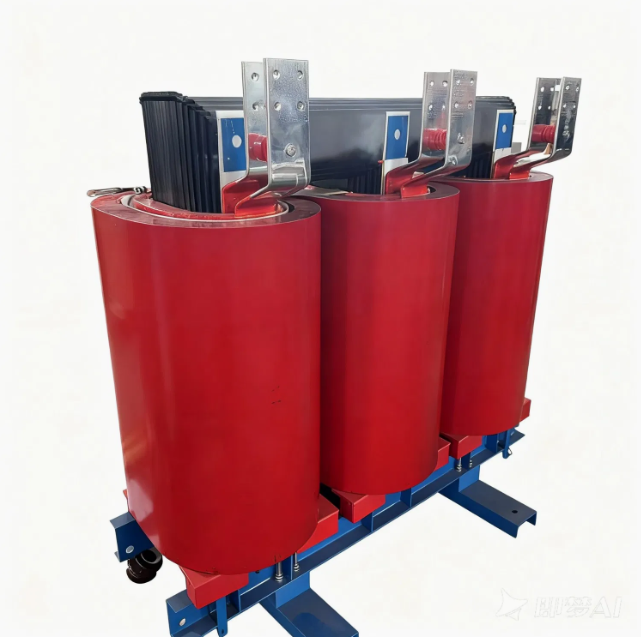
Ground-mounted outdoor installations normally take the liquid-filled option, because oil cools better per dollar and the tank shrugs off weather. Indoor rooms, basements and high-rise switchrooms take cast resin, which cannot leak and cannot feed a fire. The 50 to 3150 kVA dry type transformer range covers that indoor side, quiet enough for a hospital, below 55 dB at full load. The table below is how we walk buyers through the trade-off.
| Item | Oil-filled (S11 / S13) | Cast resin dry-type (SCB) |
|---|---|---|
| Insulation and cooling | mineral oil, radiators, optional fans | epoxy resin, air-cooled |
| Capacity range | 30 kVA up to 110 kV grid models | 50 to 3150 kVA, 50/60 Hz |
| Typical placement | outdoor pads, substations, 10 kV networks | indoor rooms, high-rise, hospitals |
| Cost at equal kVA | 10 to 30 percent lower | higher, but no oil handling |
| Noise | moderate, oil circulation | below 55 dB at full load |
| Standards | IEC 60076 | IEC 60076, CE / CCC, optional UL / KC |
Four Spec Lines That Move the Price
On any quotation from a pad mounted transformer factory China team, four lines move the number faster than the copper headline: kVA, the primary and secondary voltage, impedance, and the loss values. Impedance decides how much fault current your switchgear must interrupt, and whether two units can ever run in parallel. Losses split into no-load loss, which runs every hour of the year, and load loss, which follows your load factor. On a distribution transformer the loss table often settles payback faster than the purchase price does. Ask for both values corrected to 75°C and check them against the IEC 60076 tolerance before accepting the quote. A missing loss row is not a formatting slip; it is usually a unit that will run hot.
How the Tank Gets Built and Tested
Production runs in a fixed order, and each stage leaves a trace you can audit. Cores go down as stacked grain-oriented silicon steel, laminated to keep the no-load loss predictable. Coils are wound, dried, then assembled into the tank with the bushings and the tap changer. The finished tank passes through vacuum drying and oil filling, because moisture trapped in paper insulation is the slow killer of winding life. After that comes the routine test set: ratio and polarity, winding resistance, no-load and load loss, and applied voltage withstand. The report travels with the transformer. If a supplier cannot produce one per unit, the saving you negotiated is coming out of the test bench, not the margin.
FAQ
Q: What losses should a pad mounted transformer factory China quote include? A: No-load loss, load loss corrected to 75°C, and impedance, each with the routine test report attached. Without those numbers you cannot compare two quotes honestly, because a cheaper tank with higher losses bills you every month of its working life.
Q: Oil-filled or dry-type for a ground-mounted installation? A: Outdoor and weather-exposed sites take oil-filled, which costs 10 to 30 percent less at the same kVA and dissipates heat better. Choose cast resin only when the unit sits indoors, or where oil containment is difficult to arrange.
If you are shortlisting a pad mounted transformer factory China, buyer references tell only part of the story. Quanshi, Shandong Quanshi New Material Co., Ltd, based in Linyi, Shandong, builds oil-immersed and cast-resin distribution transformers under ISO 9001 with CE certification, and exports to more than 50 countries. We compared oil versus dry-type selection in more depth in our power transformer guide. For drawings, loss tables and a quotation, write to lunaquan1989@163.com or call +86 15588163070.