
Why Built-In Fire Protection Belongs Inside Every LiFePO4 Storage Pack
Safe chemistry is not the same as a safe system
LiFePO4 is genuinely the most thermally stable of the mainstream lithium chemistries. Its olivine crystal structure holds oxygen tightly, so it does not release the oxidiser that feeds a fire in the way cobalt-based chemistries can. That reputation is deserved, and it is also the reason some buyers skip the safety conversation entirely. That is a mistake.
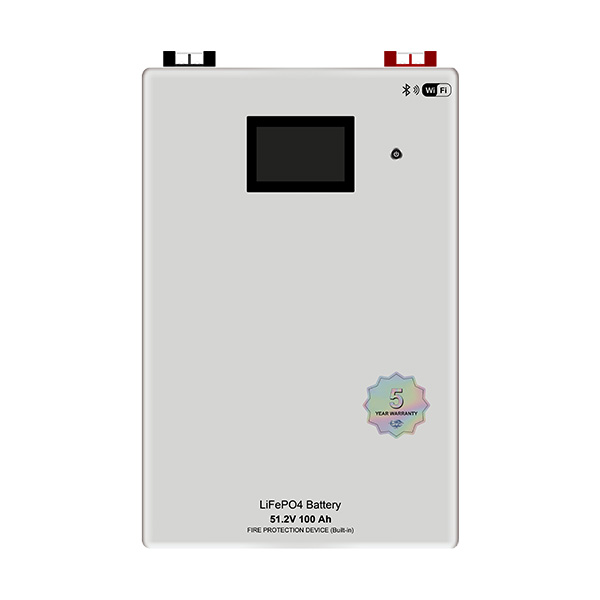
A large battery pack is an energy storage device containing hundreds of kilowatt-hours and thousands of amps of available fault current. Thermal runaway is rare, but when it starts inside a sealed rack cabinet it starts in the one place a room-level system is slowest to reach. Quanshi fits the fire protection device inside the pack on its 25.6V and 51.2V LiFePO4 ranges for exactly this reason.
What the built-in device changes
An integrated suppression device sits in the same enclosure as the cells. It detects and discharges within the module, while the event is still a single cell venting rather than a cabinet-scale fire. Room-level sprinklers or clean-agent systems respond to the consequences, by which time adjacent modules have been heated and the event is propagating.
The practical differences are worth listing. Detection happens at the source, so response is measured in seconds rather than the minute or more it takes for smoke or heat to reach a ceiling detector. The agent is delivered into the module where the chemistry is actually happening, not onto the outside of a steel enclosure. And a contained event stays contained, which is the difference between replacing one module and replacing a rack.
For commercial and industrial projects, this also changes the insurance conversation. Insurers assessing a storage installation increasingly ask what happens inside the cabinet, not just what hangs from the ceiling. An answer that includes per-module suppression is a materially easier conversation.
The failure chain you are interrupting
Thermal runaway follows a recognisable sequence. A cell develops an internal short, from manufacturing defect, physical damage, lithium plating after cold charging, or long-term degradation. Internal resistance drops, current rises, and heat generation accelerates. Past roughly 130 to 150 degrees Celsius the separator begins to fail, which creates more internal shorting, which generates more heat. The cell vents, releasing flammable electrolyte vapour, and the heat from that event pushes neighbouring cells up the same path.
Interventions work at different points in that chain. Cell grading and matching prevent the defect from being there in the first place. The BMS catches overvoltage, overcurrent and over-temperature before they damage cells. Charging logic prevents lithium plating at low temperatures. And suppression acts when everything upstream has failed, which is precisely why it should be inside the enclosure, closest to the chemistry.
What to specify on your next project
Ask whether suppression is integrated at module level or only at cabinet level, and get the answer in writing. Ask what the detection trigger is, since gas, smoke, temperature and pressure sensors behave very differently in a sealed enclosure. Ask for the agent type and whether it is appropriate for a lithium event rather than a generic electrical fire. Ask whether the device is serviceable or replaceable after discharge, because a one-shot device that requires a factory return turns a minor incident into a long outage.
Then confirm the fundamentals that prevent the event in the first place. Quanshi builds packs with Grade A LiFePO4 cells sourced from CATL, BYD or EVE depending on the SKU, with each cell graded to within 2 millivolts and 1 milliohm of internal resistance. Every pack ships with a per-serial cycle test report. Pack consistency at that level removes most of the imbalance failures that start the chain.
Certification and installation practice
Insist on IEC 62619 for industrial cells and packs, UN 38.3 for transport, and CE for the European market, with UL 9540A test data where a local authority asks for it. Quanshi holds ISO 9001 with CE and CCC and is an SGS-audited supplier.
On site, keep the fundamentals right. Maintain clearance around cabinets for inspection and ventilation. Do not install packs in direct sunlight or in an unventilated container in a hot climate. Commission the BMS alarms and connect them to something that will be noticed rather than leaving them to log silently. And keep the commissioning report with the asset file, because the day you need it is the day an insurer or investigator asks for it.
Fire protection inside the pack does not make a storage system exempt from good practice. It makes the worst day survivable instead of catastrophic.