
Energy Storage System Manufacturer in China: What the Spec Sheet Hides
Three lines decide whether a battery quote is worth reading: which cell grade sits inside, what depth of discharge the cycle claim was measured at, and whose BMS is doing the balancing. An energy storage system manufacturer in China that answers all three without hesitation is usually worth a sample order. One that leads with price per kWh is selling a number, not a pack.
What an energy storage system manufacturer in China is quoting against
Battery packs are assembled to order, which means the quotation is assembled too. Cell cost moves monthly with lithium carbonate, so most factories hold a price for 15 to 30 days rather than a quarter. The enclosure, the BMS and the certification pack are quoted separately, and that is where two quotations for the same kWh figure can differ by a fifth.
Reading the quote as a whole matters more than the headline number. A pack priced on cells alone will grow by the time it is freight-ready.
Cell grade, and what 6000 cycles really means
Cycle life is quoted at a specific depth of discharge and temperature, and the two conditions are not interchangeable. A claim of 6000 cycles usually means at 80 per cent DoD and 25 degrees; push to 90 per cent DoD in a hot cabinet and the same pack lands nearer 4000. Grade A cells from the cell maker's own line hold capacity far longer than downgraded stock, and the gap widens after year three.
Ask which energy storage system manufacturer in China will name the cell maker that supplied the batch, and ask for the batch test report. It is a reasonable request and the answer tells you more about the factory than any brochure.
25.6 V or 51.2 V: pick the bus first
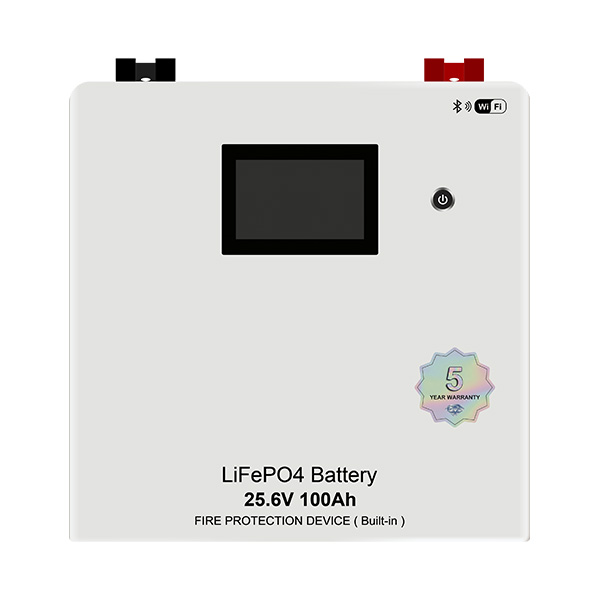
The two voltages are not competing versions of the same thing. 25.6 V packs (eight cells in series) suit smaller off-grid cabins and 3 kW inverters; 51.2 V packs (sixteen in series) halve the current for the same power, which keeps cable sizes and losses down on anything above about 5 kW.
| Configuration | Usable energy | Typical application | Notes |
|---|---|---|---|
| 25.6 V 100 Ah | about 2.5 kWh | Cabin, small backup | Light, easy to carry |
| 25.6 V 200-300 Ah | 5-7.5 kWh | Small home, shop | Parallel up to 4 units |
| 51.2 V 100 Ah | about 5 kWh | Standard home storage | Matches most hybrid inverters |
| 51.2 V 200-314 Ah | 10-16 kWh | Whole-house, small commercial | Wall or rack mount |
| 51.2 V 628 Ah | about 32 kWh | Light commercial peak shaving | Usually cabinet or stacked |
The BMS, and the fire question insurers keep asking
A BMS that only reports voltage is not doing much. Look for per-cell balancing, over-current and short-circuit cut-off, temperature sensing on more than one point, and a dry contact the inverter can talk to. Communication matters as much as protection: if the pack and the inverter cannot agree on state of charge, the system will trip at 30 per cent and the customer will blame the battery.
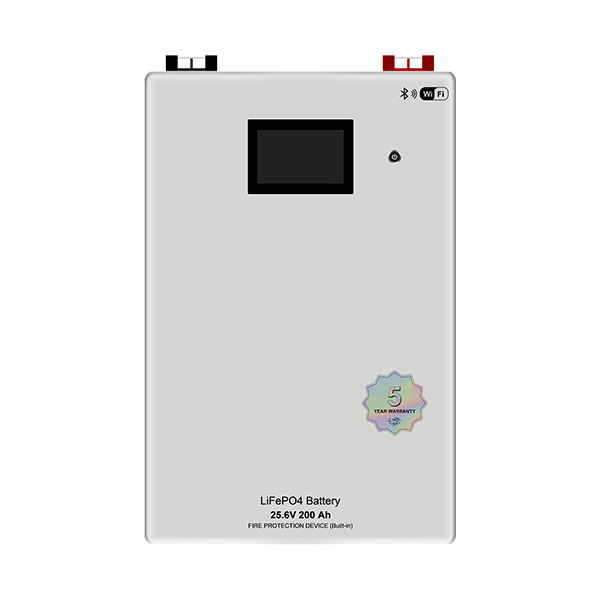
Built-in suppression is no longer a nice-to-have. An aerosol device mounted inside the enclosure, triggered by temperature or gas, costs little and is increasingly the first thing an insurer asks about. Freight is the other gate, and any energy storage system manufacturer in China shipping regularly will have the paperwork ready: UN38.3 test summary and an MSDS are mandatory for sea and air, and IEC 62619 is what most commercial tenders name.
FAQ
Q: How long does a first container take? A: Around 30 to 45 days including cell matching and the cycle test slot, longer if you want a custom enclosure or private-label branding.
Q: Can the pack be paralleled later? A: Yes, provided the units are the same model and within a reasonable age gap; mixing a fresh pack with one that has two years on it will drag both down to the weaker one.
What Quanshi builds
Quanshi is an energy storage system manufacturer in China assembling LiFePO4 packs in Linyi with the suppression device built into the enclosure rather than bolted on, from the 25.6 V 100 Ah unit through to 51.2 V cabinets above 30 kWh. Packs ship with UN38.3 and MSDS, and the BMS speaks to the usual hybrid inverters. Send your daily load profile to lunaquan1989@163.com or call +86 15588163070 and the reply comes back with a sizing table and a packing plan.